
Textured Traditions
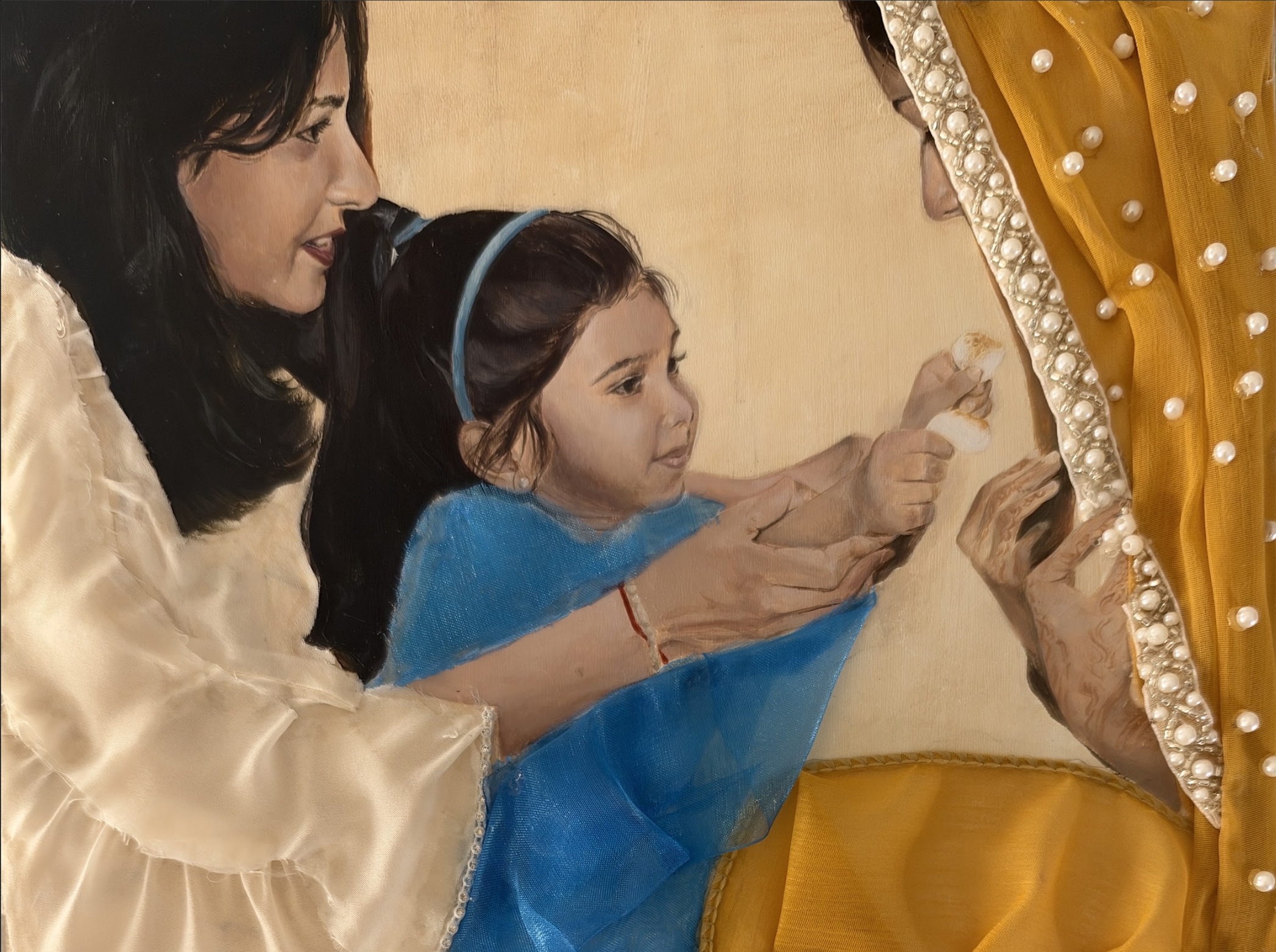
For one of my first pieces of the year, I painted my grandmother and cousin performing a traditional haldi ceremony on my mother. In my culture, before a bride gets married, they are rubbed with turmeric paste to enhance their natural glow. I began by painting their faces and hands with acrylic, then layered and pleated fabric to mimic the movement of clothing. I finished the piece with pearls and beads to emphasize the bride in this composition.
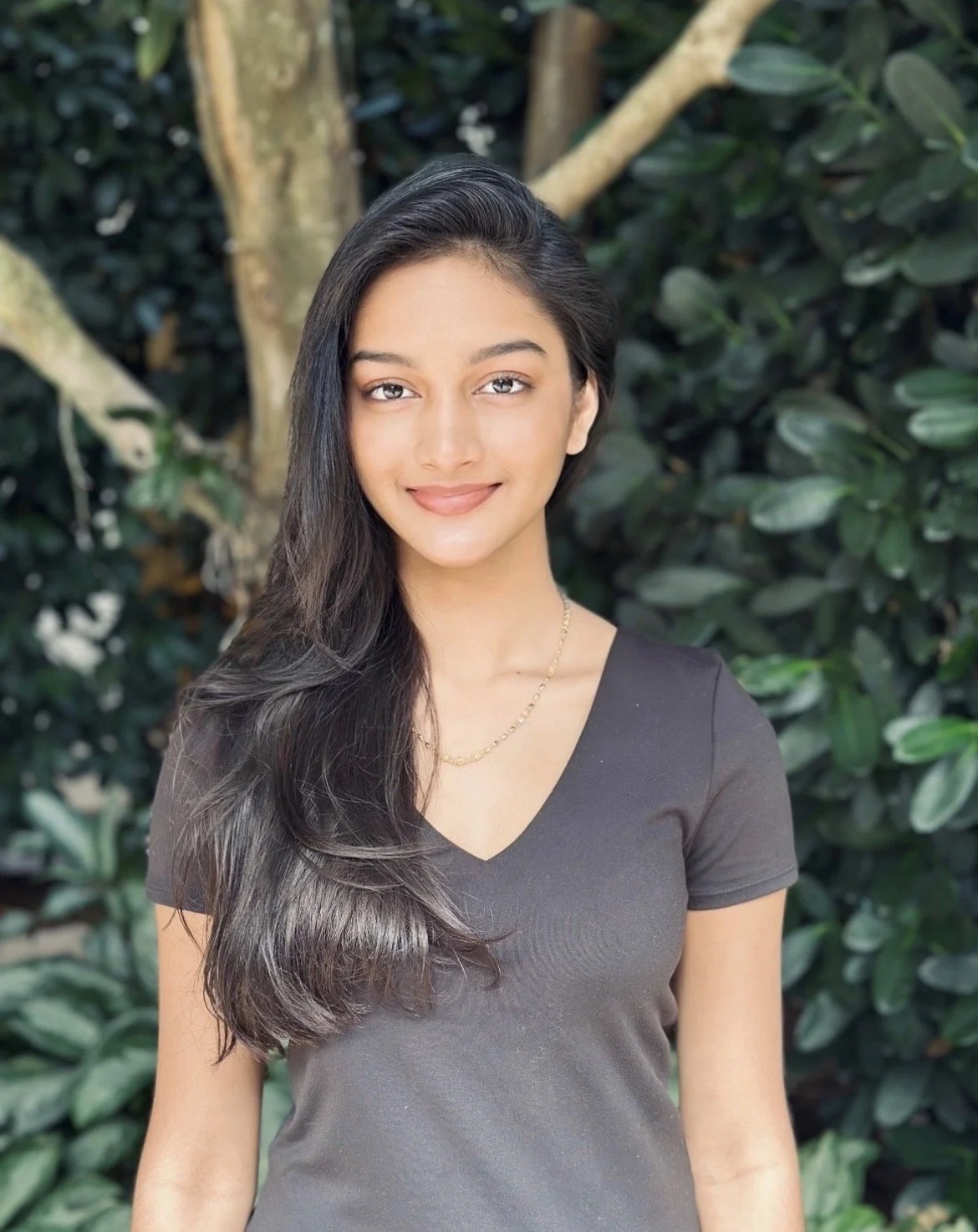
Karishma Koodie ‘28
Dhaka, Bangladesh
Dhaka, Bangladesh,
Renamed, reshaped, a capital spoken
With soft syllables, slipping off
The tongue. All my bengali words and consonants
Spoken proudly every ekushey of February,
As the moon grins a crescent shape in the holy skies of Eid.
Fabrics fluttering like a twirling hypnosis of vermillion and chartreuse; hands lifting in the air,
Both times we sing, “We made it, we made it. We survived Ramzan, we survived death.
We’re immortal.”
Crumbling roads built around meandering rivers, twisting around the vibrant, lively green
Of the flag, around the red gravestones and skeletons. Those rivers that whisper the cries of
Trapped cotton and muslin weavers, crushed under the weight of their work, hands
Scarred and calloused; hands opened up in prayer.
Rickshaws encircle the city like a flock of Doyels,
Sweet bells and rumbling wheels splitting the cracks of the earth open.
Attics creaking as the soldier hides from the roaring
Freight train spinning above, chanting
“Ya Allah, ya Allah… amake bachan…”
The freight train crashes into metal,
The fingers of “Warfaze” guitarists bleeding, vocalists
Screaming the notes until their throats become raw, the ghosts of war and resistance
Breathing through their music.
Men and beggars whistling for a painted rickshaw
And taka, the taka found in Dhaka,
A young girl standing in front of Aarong, her sandals clacking against
Hard stone over alluvial soil, the shuffling of older women and the cacophony
Of blaring buses, of shrill cars, covering the rustling of her clothes,
Clothes made in Dhaka. Dhaka, Bangladesh,
Renamed, reshaped, a capital spoken
With soft syllables, slipping off
The tongue.
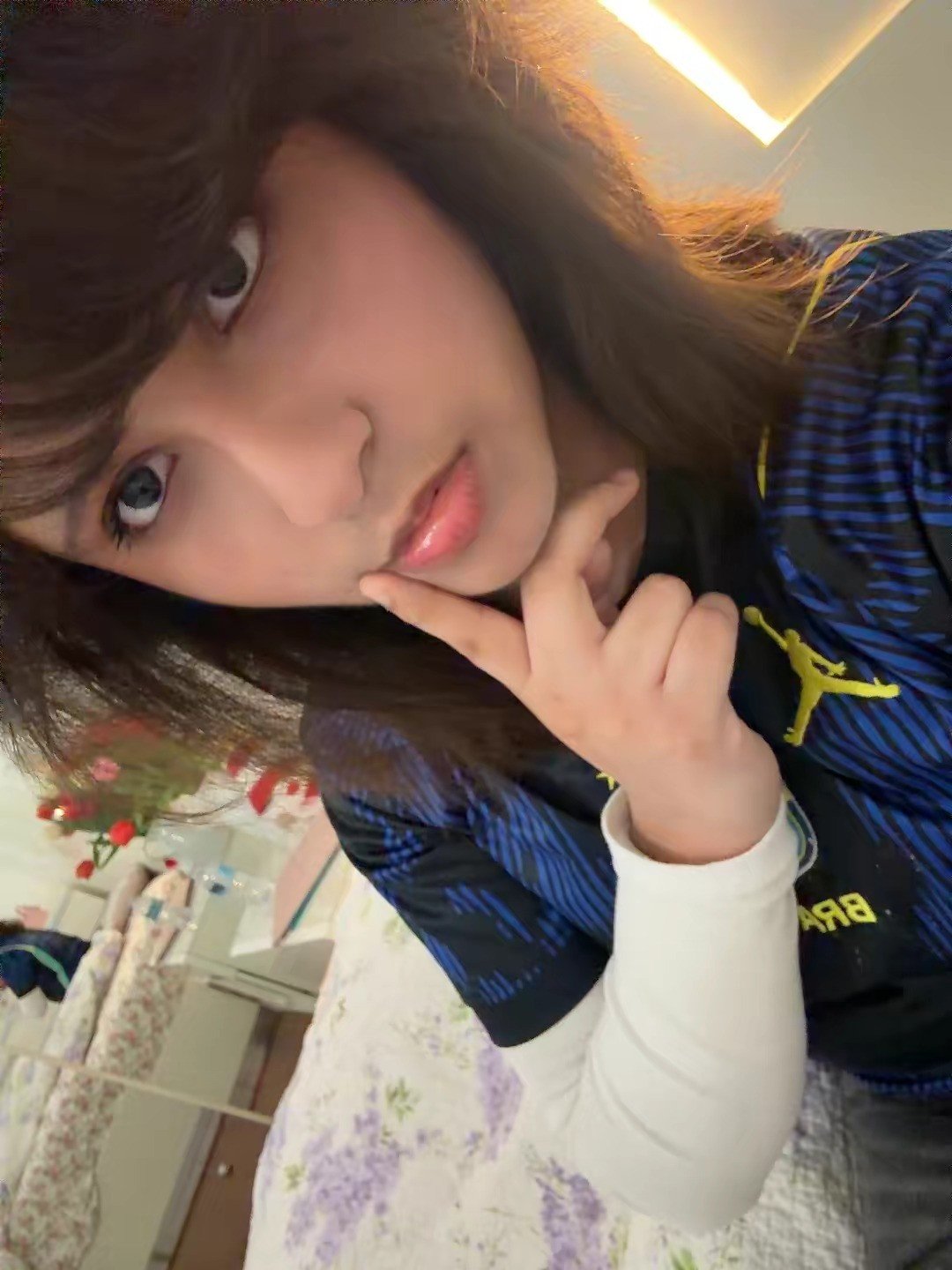
I wrote this as a way to connect with my native country and the city that I was born in. It was a way for me to learn about my culture, arts, and history and express it in poetry. I wanted people to understand the life in someplace they weren't familiar with.