
Call Me When You Get the Chance
Call me burnt ash of morning stars, call me smoked salmon on a heated wood slab, call me the
forgotten smears of matte ruby red in between the seats of your mother’s old Civic.
Call me the wet slick of the highway after a night shower, call me after a shower, call me when
your head is packed and crowded with the fog of Dove body wash and orange loofahs, call me
when your eyes sting with the slap of Revlon shampoo and your hands thrash to reach for any sort
of saving grace.
Call me postage stamped baby, Golden Gate, Eiffel Tower, Colosseum, call me statured and
stale, call me French. Paint your lungs black with me, eat cigarette butts for breakfast, lunch, and
dinner, walk the streets in kitten heels and steel toed boots, steal breastplates and gauntlets, drink
wine with God in a garden full of lush vines and weeds.
/it will leave us with bruised feet and cut hands, but what is too much for drunken giggles
and lazy afternoons?/
Tomato festivals in Spain, food fights in our middle school cafeteria, hose us down in the streets,
watch red pulp and stem sink into the Earth, tighten the plastic wrap on our clothes, make
sure nothing stains the warm bodies underneath.
/it is the only way to forget the bloodshed./
Call me surgical and pristine, call me when you have a toothache, and I will not tell you of your
rotting teeth from years of too-sweet apologies, call me sugar crash, candy crush, mom’s worst
nightmare.
Blink once, and I'm gone, you say. Write your chapters on my pages until I am nothing more than
scribbled ink and blotched pen stains. Paragraphs upon paragraphs of run-on sentences and
misused semicolons, streams of cuss words directed at no one in particular, misused metaphors
and janky similes, lines of unkept promises and half accepted apologies:
/“We are everything but the stars we say.”/
Hoping that one day we will be nothing more than exploded particles, gas spread throughout
galaxies, limbs torn, body parts gone, leave me the ash of a morning star: broken and unkept,
leave me soft but still gone. Until we are no longer screaming matches in Walmart parking lots,
and “I hate yous” through clamped teeth, but rather the silent whisper of people that were gone so
fast only the trace of their breath was left behind.
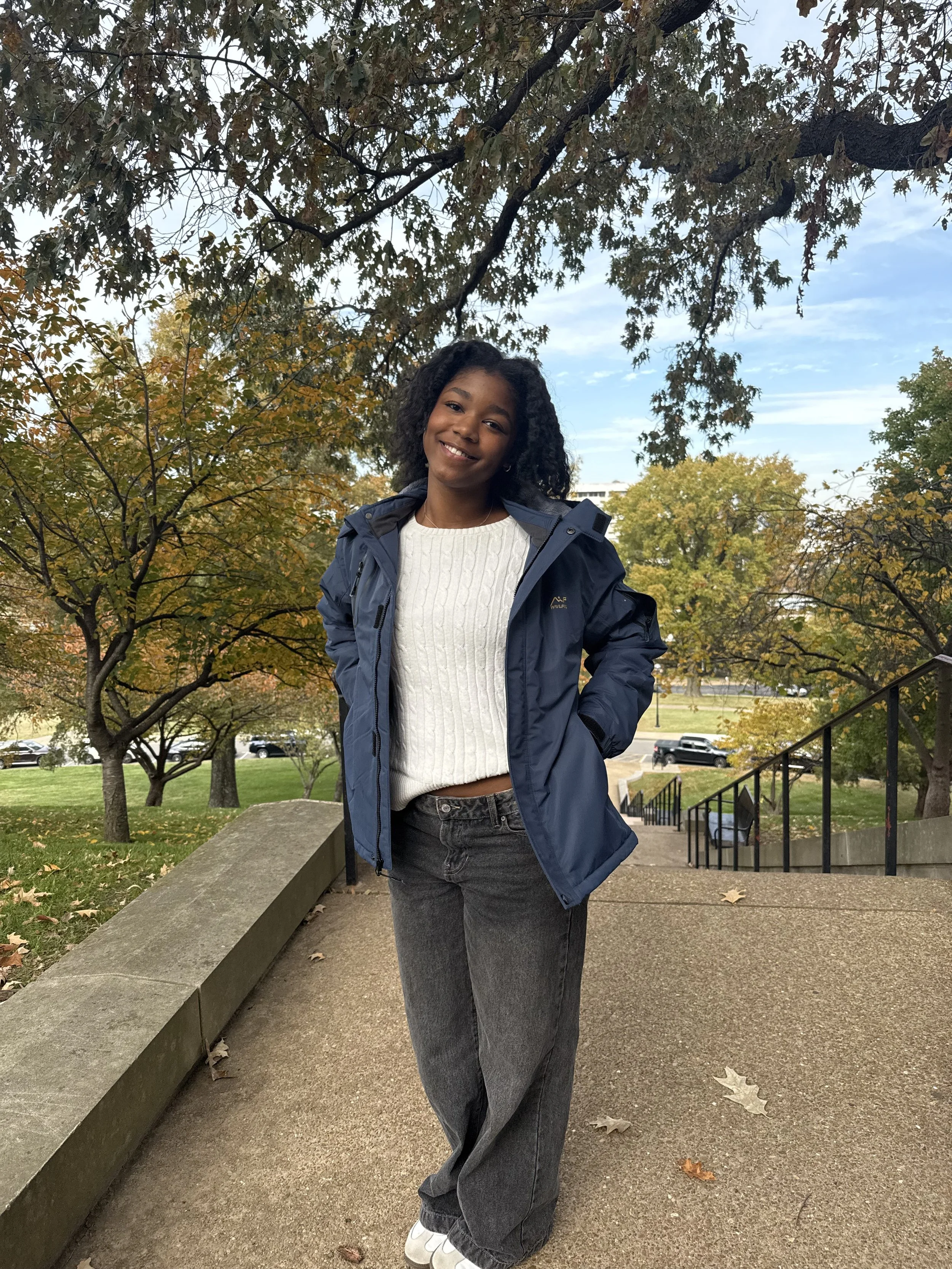
Karmaiah Smith ‘26
In this piece, I really wanted to focus on using techniques like stream of consciousness and enjambment to convey my speaker’s hopelessness and desperation. I wanted to convey a situational cycle between the two characters, and how, despite all of the negative aspects of their relationship, the speaker still longs to connect because of how familiar and comforting it is between them. It started off as just a long train of thought, but it allowed me to really get intentional on the descriptions, events, and story I wanted to convey through the speaker's inner-retelling.
The Life of a Martyr
Can you hear their screams?
Brother reaches for brother, and he isn’t there,
warm hands grasp cold faces—
alarmed, their wails are small in the expanse of silence
that drowns them.
Fake smiles comfort little girls as they
hold their grandfathers’ hands;
it doesn’t take long for her to be erased
from the land her ancestors once thrived on.
Nowhere else will you see old men weeping on streets
before turning to the sky and thanking their Lord
that their little girls are in a better place.
They hold themselves upright,
because they are men,
they are martyrs,
and they thank God with every breath,
with every step.
They wish they’ll find her up there, too,
when it’s their time.
When they hold their hands out,
they beg to God that their time will soon come,
and it will.
Can you hear their screams?
The way their voice flows
under the dust of bombs,
destitution, the new norm
no one and everyone
saw coming—
the world acts deaf and blind
to it all.
Even when the rest of the world
turns an eye and covers an ear,
who can lose when God is on their side?
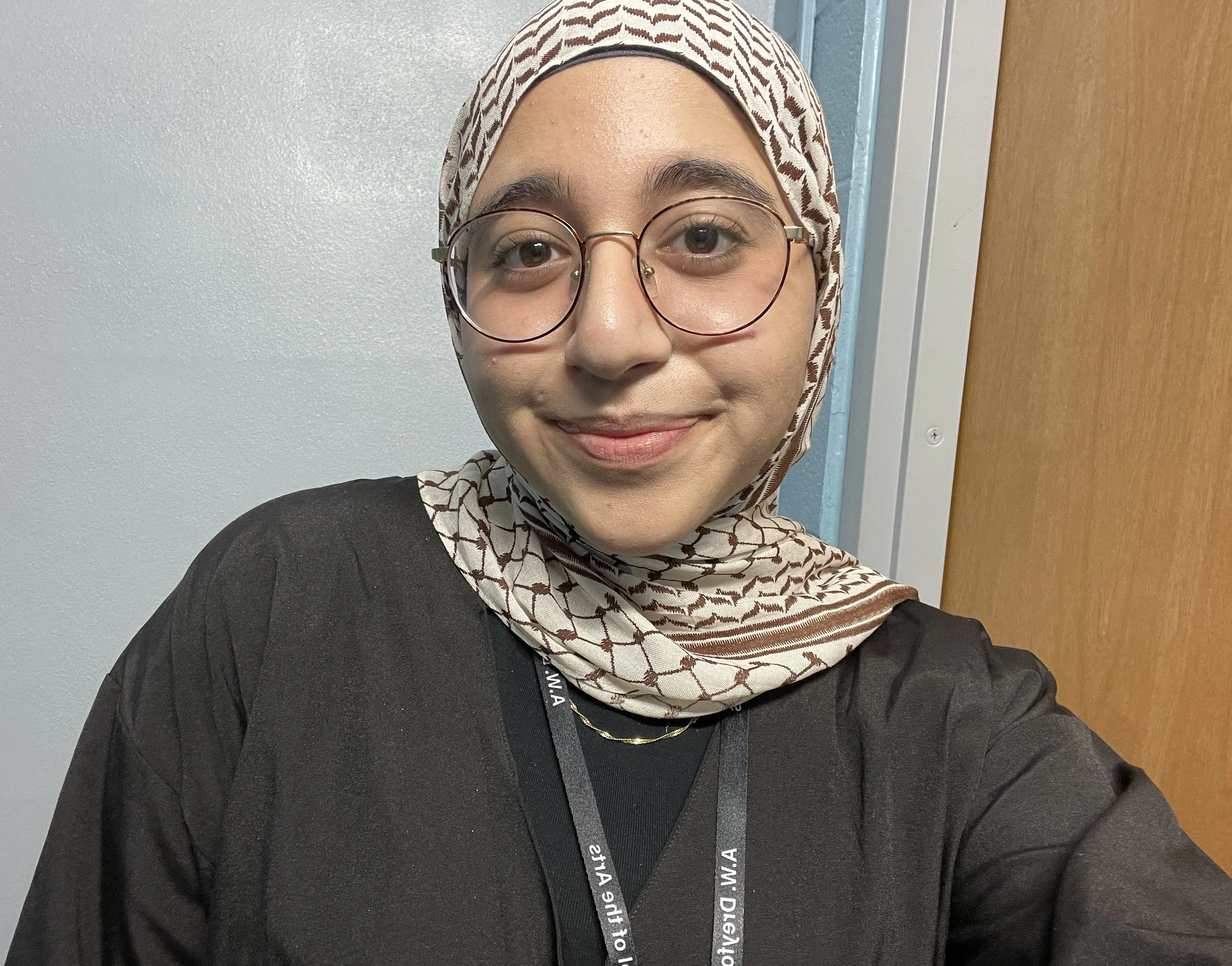
Hanna Masudi ‘26
All around the world, people are oppressed and killed for exploitative purposes. But each casualty is a life, a person with a voice and a story. It is truly unfortunate that knowing their stories, let alone their names, is not guaranteed—and that the world is blind to their suffering.